Wednesday, June 5, 2013

Is Justice of Wisdom?


Let us imagine a baby sitting in a large dark brown oak chair before a magnificent oak table, so colossal and dense as to make the baby seem twenty times smaller than it actually is. The baby sits in the middle of a large courtroom filled with wooden benches and people in suits. It is noisy at first with the shuffling of shoes and the cascading of the voices of the attendees, but quiets very quickly as eight people in black robes, stone faced and concentrated on the congregation ten feat before them, enter and elegantly take their seats; they could have done it blindfolded. The distance between them, though, seems far longer, stretching for miles, separating the wise and the fools.
To the baby's left sit four old wise men, their gaunt and worn faces hanging gracefully over stockpiles of letters and words. Their eyes and brows are wrinkled, making the impression on one that the men had always had some writing in front of them. To the baby's right sits four old women, the wisest of their peers, also hunched over grazing the mountains of paper. The courtroom is hot and the smell of perspiration and hot heads fills the room. As the case proceeds all try to contain the appropriate air about themselves, but it is getting hard, people's deepest principles are being scrutinized and leered into. It is a hard day; Justice is being served.
The heat has risen to a sweltering mass which engulfs all attendees, the vote is split. Four of the Justices have voted nay, four yea, it is up to the baby to decide. Called upon to cast his vote the baby looks around with neutrality and gazes at the four men, then the four women. His face is still, showing no discernible emotion, which with the audience so on edge, exactly what they are not looking for. Voices are heard sporadically throughout the benches; "Is he smiling?" "Is he going to cry?" "What will be his reply?" Some even questioned if he was going to say something. One man cried, "This cannot be! He has not paid any attention all day!"
It was true. Through most of the proceedings the baby dozed off, nestling its head between the arm and the back of the chair. For intermittent periods of approximately twenty to twenty-five minutes the baby cried, being silenced after both it's diaper was changed, to be exact, twelve times, and when he was fed from his mother's bosom. His mother had been escorted in by a three-maned police team. She had been quickly notified after the female members of the court realized the baby might desire some milk, and that was the reason he was making such a ruckus.
Previously he had been generally ignored by the crowd, but now all eyes in the courtroom were dead set on him. He was fond of the attention and giggled, but was stopped when one of the justices leaned over and said "Don't be a buffoon, you must cast your vote. This is not a laughing matter."
The baby stared wide eyed at him. The justices face grew redder and redder until he screamed "You dimwitted, egg headed fool! Cast your vote! We will be stuck here all day!"
The baby relieved himself.
The Justice grew pale at sight of such indignation. His lower lip quivered and his arm twitched. A woman towards the back screamed "You had better not!" The justice looked up at his arm, he could see his fist out of the corner of his eye. He immediately retracted his fist and put his head down. The embarrassment he was now suffering was visible in his face, red and boyish looking, he looked around the courtroom as if searching for words to appear above the heads of individuals in the audience.
"How did he get here?"
That was a good question. This was the child's first case, having been bequeathed his position a mere three weeks prior to the case. In the great country where this court existed, the president makes choices that effect a great many things. The President had gotten into a habit of reading before he went to bed every night. For one hour, exactly, he would read books that his wife had bought him at garage sales and flea markets.
The stack of books on his night table at the time of the baby's appointment were all purchased at an estate sale of a very old politician. The old statesman had fought for years to bring statesmanship back to the people of his beloved nation, hoping that through true and loving government that he would bring the people justice. The battles were long and he grew very tired, slowly removing himself from everything that he had once created. He gave up. There was going to be no justice. He packed his things up and went to live in his old manor with his wife and books. The doctors had said he died of cancer, but his last words were said to have been; "Beware they'll kill all of us someday."
The books were filled with words about love, power, and justice. Justice had become an object of great interest to the President at the time, previous to this juncture he had shown little interest in actually studying justice. He knew the right words when he was running for office.
Slowly moving through these books, twenty to thirty pages a night, he started to have questions. He wondered why his fellow countrymen thought so highly of justice but implemented nothing which remotely paralleled the words in these books. Is there no true understanding of Justice? Do my fellow leaders strive to achieve it, remotely and within their own perceptions, undermining one another's justice, and thus the greater justice? Do they even desire to do Justice to one another, or do their interests and understanding of justice skew to a self-serving and predaceous nature? He was wrought with questions that he carried with him for days on end, not being able to take any action in office; what was right and what was wrong?
Suddenly the opportunity had been presented to him; An ancient Justice had just died leaving one of the seats on the nation's highest court. It was up to him to designate who was going to be the new Justice. Lines of men came flowed outside of his office. Men of great years and learning, staunch, with what would appear to most as just faces.
Men moved in and out of the office, each man having exchanged but a few words with the president. The president saw through their veneer. The justice that they wore on their faces was not justice, but self-assured intellectual superiority. He knew that these men would be no greater than any of the current leaders that surrounded him, so he gave them the time that any man deserves and left them to their life.
After many of these interactions, he left to go for a walk. Walking down the avenue in the shadow of great oak trees he came across a mother strolling with her baby. He glanced at the baby, thinking for a second about how adorable it was. His thoughts could have stopped there, but they did not. He realized, his face filling with elation, that before him lied his solution. He felt like a scientist finally finding the correct compound for his experiment. He would be making history.
The president quickly motioned for his security gaurds to leave him for a second to talk with the woman.
"Hello, how do you do today?"
"Fine", she replied. "Yourself?"
"I need your baby!" he blurted out. The excitement had over taken him, tossing his diplomatic nature to the sharks. "What?! You want my child? Who are you to say such wild things?"
"Well ma'am" He began to say as he regained his confidence, after all he was one of the most important leaders in the world. "I am the president. I would like to appoint your child to be a Justice."
"A Justice!" She said, as naive excitement filled her.
"One of our Justices has recently died, of old age of course, nothing too serious. I need to replace the Justice, and I thought that a baby was an ideal candidate."
"How?! My baby?"
"Well yours was the first I saw. I had been in serious need of a candidate without of all of the preconceived notions and learned Justice that all of my other Justices have. They are old and set in their ways, not making them truly suitable to decide what true Justice is. As we grow older we come to think of right and wrong in black and white, able to see the gray but quickly disregarding it as folly. I need a mind that has been untainted, one that hasn't been warped by this world. I don't know if your baby knows of any Justice. Maybe it's all made up as we grow up, but I have to see. Would you do that for me?"
The woman was hesitant, looking at the baby whose eyes stayed on the tall regal man standing before it, then back at the president. Her eyes shifted at least a dozen times before she finally silently nodded. "Will you take good care of him?" She asked. "Of course ma'am, we will make sure everything is taken care of. The Justices do go home you know."
"Of course" She replied as she softly patted the head of the smiling baby.
In the courtroom the same Judge, who had been told the story of how the baby had gotten his position, starred at the baby. He thought to himself "How can the president, the most important man in the world, play games like this in my courthouse! I worked so hard to get this and this baby gets the benefit of circumstance, it's not fair! It's not Just!" He quickly noticed that the court's eyes were on him mumbling to himself and immediately straightened himself out and looked back at the baby. "Well now that we've been given the story as to explain your appearance here, could you please cast your vote. It really is of the utmost importance. You're vote could change the Justice system."
The baby looked at the Judge wide eyed and giggled.


Monday, June 3, 2013


Would a Play-Doh Society Survive?

Plato's society disregards human error and circumstance, assuming that much of what causes the downfalls man are problems that can be solved by society. The initial flaw in Plato's city is the assignment of work to individuals who's facilities best fit the position given to them. He explains how this, and only this, is the foundation of Justice within the individual. With political and social Justice growing from the roots of the individual Justice that each citizen has, Plato takes a quick assumption that correctly assigning a man to his rightful task is much easier than it actually is. To match a man to his true skill is not easily done. Looking at many of the adults in our life, their success was achieved later in life, if ever. It is only with experience that these people have grown to know their skills and greatest abilities. There are examples of a person knowing the career they will pursue very early in life, but even then one can question the validity of their choice; how can this person know that this work will be best suited for them? They may well accomplish a great deal and be very successful, but who is to say that they would not have succeeded at something else to a far greater extent? With a plethora of possibilities riding on every second of our lives, there cannot be a best path. There can be a true and virtuous one, I do concede, and there is definitely one that is wrong, but there can be no best path. So within the guidelines of Plato's statement that every man should follow the work that is best for him for there to be Justice within him is impossible to achieve with the knowledge that one can always be better at something unknown. We have tried before to make the same designation of labor that Plato's society would  We have given students aptitude tests, which if done correctly, will decode the great mind of a student and project for him his future, but so often the student decides to follow a path completely opposite to the one laid out for him. In Plato's society this would be a problem because they might well get into trouble pursuing something that is not in their nature, but the student has gained new knowledge of himself and his world. The question then becomes, is a man more Just when he has explored the world, learned of new things and witnessed events that have altered his understanding, or is being dutiful to one's society over one's own interests, even if that leads to ignorance and naivety? Look around and witness the millions of people who have pursued the wrong goals and now bring suffering to those around them, they are what Plato's society would never have, but those same people made the decisions they are now suffering from, on their own. If Justice begins with the individual, how can society create the Just civilian?

Monday, April 29, 2013

An Open Letter To Parents

You have done fine. You have lived and have received the graces of this world as anyone else would have. Your actions have spoken, and they have been either accepted or defied by your children, but nonetheless you have shaped, determined, guided the life of your child. We, as children, are you. We have been blank canvases which you have painted upon, in collaboration with living artists we encounter every day. I accept your rule, your ideas, your mistakes, your successes with open arms. I accept the continuous and unrelenting changes that you have catalyzed in me. I would not be me without you. Surely I can disagree with you, but that dissatisfaction with your rule is only available to me because you have instilled, somewhere in the vast history of my being, moments which are not even recognizable any more, my rebellion against you. You are individual, human, and so to fight your being, rather to act without recognizing the long term effects every moment we as children share with you, would be destructive. But! Even if we do fight, disobey, disagree, act without thought, you are still molding us into the beings we are.
Though, considering that you have this great effect on us, I would suggest that you consider your actions to a greater degree, especially at this point in our lives, when we are exploring independence. We, as teenagers, are changing course, becoming or at least trying to become self sufficient and directed. We swim in murky waters with you, being able to do much of what is necessary in our lives by ourselves, but at the same time being dependent for shelter, food, and occasional help. This pond that we now swim in is new to both of us, but it does not seem to me that we act as if it is. We as people, are reactive, not proactive. Furthermore, we are reactive in the worst way, we judge another person's actions based on what we would have done. 

Your children are not you. They are of you but are not you.

So when your child, swimming in the cloudy waters of independence and self discovery, makes mistakes, I would suggest that your actions be carefully considered. One of the most dreaded words of a child from their parent is disappointment. We do not want, whether biologically or psychologically, to disappoint you, but we will. In our exploration of the world and ourselves we are going to make mistakes. We are going to continue making mistakes until we die, but you will not be here to punish us. The world will be. I am under the impression that besides the countless cases against this, in general things work out. People are good. We are good. We want to do good, for you, for ourselves, and even for humanity. At this point in our lives your words are as good as the rest, so your attempts to rear us are futile. If we are going to do wrong, we will be the only ones to correct it. Your punishments or praise, at this point, are only impediments to our nature. It no longer matters. While we fundamentally don't want to disappoint you, your disappointment becomes less and less potent as we grow older. The only power you have is that you are currently our guardians. It is your duty to consider our position in life, our state of being and mind, and while it is also your duty not to let us destroy ourselves, many of your actions for our self preservation in your world are now misguided. I can only hope to beseech to you the knowledge that our rebellion is not against YOU, it is against anyone who limits and controls the gateways to our independence, which at this point is you. All that is available to you at this point is the hope or knowledge that your years of raising us, when it did in fact matter, have instilled in us the ability to see right and wrong, to do good, to be good for ourselves and others. We are becoming adults, and it's a strange thing to witness.


http://www.youtube.com/watch?v=b2DUdsN_f5k
XoXo

Friday, April 19, 2013

Civiks.

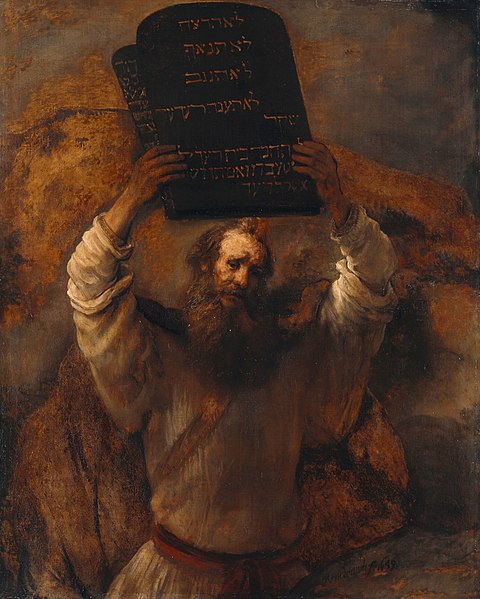
File:Rembrandt - Moses with the Ten Commandments - Google Art Project.jpg
Mankind is a unruly beast. Our actions allude to a great instability in our true nature. Are we good, or are we evil? Looking at a very recent event, the bombing of the Boston Marathon, it would be hard to say that we are good, but within the same devastating moments emerged heroes, men and women who sacrificed their own security to save people they didn't even know. The division between people's own perception of man's nature of good or evil is identifiable within our own media. What has been looked at? The devastation, the recklessness, the horror. Sure there are a few moments given to the heroes, but that doesn't sell as well as pain. Man isn't interested in his own saviors, but rather what could cause his demise. Consistently we are  drawn to discuss reasons for the bad as if there is a solution. It is a problem which is so unfathomable and unpreventable that it is rarely even considered. Man commits evil because there exists evil in all men . As is said about the Lutheran Church's belief in man's nature "You're born a sinner. You live a sinner. You die a sinner." The only solution to this fundamental nature of man, is to outline rules. The ten commandments bring forth proclamations telling God's people what they should and should not do. As the creators of the bible saw, and we see today, man needs to be told what to do. In the pre-school classroom, in high school, in adulthood, there exists overarching ideas of what one is supposed to do.  While our existence is completely individual, it has been thousands of years since man has lived completely on his own. Community is the way of life for us, and because of this we must lay down the law. Disobeying the ten commandments lead to death in biblical times, and I am glad to say that we have moved beyond killing for adultery. We have now, in  more intellectually understanding times, laid rules for which we should abide by just because it is for the betterment of all of us. Does this mean that there now exists a sense of community in every individual? No, but we have acknowledged, at least in this nation and other modern nations, the independence of our beings.  As with the bible we can punish, not by death of course, hurting one another, but no longer can we impose upon someone that they must be proactive in the betterment of their community. Civics is an illumination. An illumination of the way in which we should live with one another. Created over long periods of time, cultural and sociological changes, each community has created undocumented rules that provide a guideline to which every citizen can follow and better his community. Voting, for example, is a considered a civic duty. Citizens of the U.S.A do not need to vote, and there is no punishment if one does not, but voting is participation within our community. It empowers the citizen, giving them a say in the governing of themselves and their fellow man, and because of this participation it is beneficial. Civic duties exist within every community one exists, down to a Chicago block; keeping one's lawn clean and nice is beneficial to all that live on the block. Civics are a guideline for man, a lost and unruly beast. As humanitarians believe there exists good in all of us, it is just that we must tell ourselves how to be good to one another. 

Thursday, March 21, 2013


Is Poverty A Choice?

First:
Mankind will generally agree that there should not be suffering, and as a general rule when we have the ability to remove suffering we should. But looking at United States alone, how can we solve a problem when culturally, educationally, idealistically, we are all at fault for the poor? As of now, when discussions of solving the inequities of the current U.S. distribution of wealth come into fruition, there is polarization on almost every point. We all agree that the poor shouldn't be as poor as they are, but when it comes time to find a solution we can't seem to have consensus. This is because we all have different reasons why we think poverty exists. There is consensus that the bottom shouldn't suffer, but it doesn't look like we want to give up our slice of the pie. 

Our school's teachers, who on a general rule fall to the left on our political scale, are part of and support a union who has fought in support of raises and benefits for its teachers for years. Now one would think that if their political affiliation and their beliefs were true and prudent, they would use their collective not only for themselves but for the injustices that break the families living in homeless shelters across the nation. Utilizing their power and influence in this city not for higher wages and more benefits but for the betterment of the people who their elected politicians say they will help but never really do. But like their political counterparts they are greedy with their time and money. They are self Righteous. 

The men who sit in the brokers chairs up in the towers that face to the northeast of my school claim that they have the solution. They know that the market will take care of all. They trust in the market that is feeding their children steak and parsley. Probably never having even dealt with poverty, you know charity-diners don't usually look as good if people who don't have the glitz come. They have no understanding or regard for those who to them are money wasting burdens who could be working. Like their political counterparts they WANT TO SOLVE THE ISSUE but seem to do nothing.

Now in the ghetto to the west of my school, there are many types of people. There are those that choose to be poor, doing drugs and wasting their time and money seeing no future for themselves. There are those who are trying their damnedest to get the hell out. There are those who are fine scraping by. All of them are living a life that is not even comparably as comfortable the two examples above, but they all seem to have something in common; they act for themselves.

See this is the problem we have everywhere, it's only that the debate over poverty brings it to light; WE ARE SELFISH, NOT SELFLESS. 

MY SELFLESS AND FLAWLESS ANTIDOTE:

I'm am going not going to be the guy that complains and then gives no solution.

Is it society's fault or the individual's?

It is both. We are not perfect. And for Christ's sake of course society is not. We need to support those who are unable to support themselves. The mentally ill, the disabled, impoverished mothers, but we also need to acknowledge that Welfare is corrupting and is not necessary in many cases. Welfare should continue to supplement the employment of those who are employed. Employment is the key to moving out of poverty. Employment utilizes and rewards dedication, timeliness, responsibility, all qualities that much of the ghetto and the underclass need to learn. Unemployment needs to be way shorter to actually create some incentive to work, and if one does not find a job, they can  work for the government at a newly implemented organization which works on all of the factions of American infrastructure. Now we're paying for your ass and getting some work out of it! There are obviously flaws to this plan. Number One being there's a lot of stuff left out, but it illustrates a point. The difference between my plan and many others that I hear is that my plan has ideas that come from both sides. Sure it's biased. I'm human. But it is also open. I listen to everyone's ideas when they speak. I may argue, but I understand that there is no greater validity to my ideas than theirs. I have learned a lot from other people: self-righteous, well read, informed, not one care in the world; if you cast away the shackles of thinking your right, you might actually learn.


XoXo

Let Love Reign On You, 

You American Cowboys.


Tuesday, March 19, 2013

Malcolm X Transformation

We had discussed in class the necessity of Mr.X to become educated. We were fifty or so pages in the book, but the problem was apparent; this man had anger that was unbridled and spiteful. We came to agreement that education would benefit Malcolm X. Naively we laid out the correct path for Malcolm X to take on his journey to leadership. Now, having read a much greater portion of the book, I see that Malcolm X has done what we wanted him to. This is not a coincidence, it is the acknowledgement by both parties, our class and Malcolm X, that he needed to become as educated as his mind would let him. We both understood the capabilities of his mind. We both understood his limitations. 

In prison he reforms. His case should be one of celebration for the penitentiary system, introducing him to a new lifestyle, one which would be culturally considered a vast improvement. He begins his route en becoming an educated man. As Artem Potemkin writes "He got mad at himself for being so inadequate that he could not write a cohesive letter in reply to Elijah Muhammad", but this fury is greater than being unable to respond well to a letter. It is what both my class and Malcolm realized, turning us both to frustration; he is smart and just has made the wrong choices. The Nation of Islam, manifests as a solution and goal for Malcolm. Providing him initially with small goals like becoming literate to the point of writing a legible letter and living a lifestyle which is conducive to learning, The Nation quickly spackles the holes which lead to Mr. X's less than fulfilling existence


This explains his dedication and complete worship of Mr. Muhammad and The Nation. Together, they acted as a savior to Malcolm in what looks to be like historical-perfect timing. In prison he studies, more aggressively than one would consider "studious", copying the whole dictionary. This is insanity, but it makes sense. X is transforming, he is breaking down the shackles of years of wasted time and life. He has the determination that can only come from complete worship, which seems to happen often after a complete crumbling of one's previous lifestyle; Malcolm finally being arrested after running in fear of being caught for years. Always fear. Always death. Throughout the book he continues to evolve as a man and leader, learning, making other transformations, but arguably this is the most important. He completely changes himself, washing and erasing away habits that take people decades to destroy. He takes the initial leap that will ultimately bring him from black man to black leader. 

Monday, March 18, 2013

Is King Still King?


Yes and No. It's seems that all men of historical significance seem to loose their potency over time. It is not as if the citizens of today have lost the ability to understand what these men and their actions represented, but we can no longer relate to the very specifics of what they did. Martin Luther King Jr has entered into this place in popular culture; a figure and martyr for a time period in American History, who has come to represent an ideal instead of his own history. Today his exact actions represent much less than they did in 1960's racial torn America. With segregation no longer having a physical manifestation such as two public restrooms for each race, much of what he fought for has been won. His words specificity do not have the relatablility they may have once had. 
There exists an appreciation for the in depth and learned history of great leaders like Martin Luther King Jr. who's life is full of events, times, details, which need to be studied to build a comprehensive and enlightened understanding. None the less, this is an appreciation, rather, an affection for history, and fewer people belong to this club. 
For the rest of mankind this lack of specificity has transcended Martin Luther King, like the men who study history, to a new club. As with many other men and women of history, the trivialities of time and location come to represent a much grander concept. To most people today Martin Luther King Jr. embodies the protest of continuing racial inequalities in the United States. Furthermore, globally he has come to be an icon for the brotherhood of all men existing as equals.
His name and image if not charging us with the vitality and confidence necessary to overcome the continuing injustices of man, represent at least a reminder that there comes a time when humans reexamine what is righteous and just. They protest. They fight with everything they have. These are a time for brotherhood. His being, even if only in pictures, text, and recordings continues to give inspiration for a better nation, world, and self. King Is Still King, and will be as long as we remind ourselves of those who represent the good in mankind.

Wednesday, January 9, 2013

Missing:

Direction:

The direction that the class needs to take is gaining a sense of confidence. There have been snide and outward comments about Peter and I taking a dominate role in the discussions. I will speak on behalf of myself alone when I say that these comments are unwarranted and not constructive in any way. They are actually diminishing and counter productive. In life if you do not speak you will not be heard. There will always be loud voices drowning your voice out. What needs to happen is that instead of retracting and stewing in irritation, speak up. Every person's voice deserves to be heard. My actions may not seem to display this belief, but I do believe in it, passionately. I consider everyone in class an equal, and so I treat everyone like an equal, with the enthusiasm and confidence of one who enjoys discussing ideas. Ideas do not move forward in restrictive structure, and yes the current school wide classroom system is restrictive to ideas and students. In class there have been instances where people have become passionate and not allowed "domination" of their ideas; these discussions have been some of the best the class has had. If the class gained a sense of confidence, the passion with which many ideas brew in my fellow students heads could be thrown out into the ring and be chewed over. I, personally, think and listen best when under a heated and loud discussion. It may not seem like I take anything from it, but after class the words sink in. This quiet mean girls thing is just not kicking it for me.

xoxo
Gossip Gurl
Thankful

I am thankful for my classmate Peter Casey for the reasons discussed in the essay above. His confidence in expressing his ideas is refreshing in a school which prides itself on academic excellence but contains classrooms where expressing ideas seems to be unwarranted. While our philosophy class and a few other outliers in the school have been open to discussions, I am delighted to see another student who has not been suppressed  by the education system. He has brought up many concepts and ideas which I have learned from. Many of our class's discussions, in which he was involved (most of them), his ideas and rebuttles to my concepts have lead me to further thinking about the very concepts I put fourth. He has lead me to think more, and strive to better explanation of myself, both of which are fundamental in the subject of philosophy. So thank you, P.C.
I don't like macs anyways.

xoxo


Wednesday, January 2, 2013


/\//\/DOPETHRONE/\//\/\//\/\/\//\/\/\/\////\/\/\/\\\/\///\/\

Dopethrone will blow your mind.
Dopethrone will make you deaf.
Dopethrone will make you want to destroy.
Dopethrone is genius.

With every guitar and bass down-tuned, the sound of Dopethrone is hate. In 2000, when Dopethrone came out, Electric Wizard was able to embody everything that is Metal music; heaviness, destruction, anger, hate, etc. This is because on Dopethrone Electric Wizard is honest. They put up no facades. Not once do they seem like what much of metal music seems to be; suburban boys who decided to dress up like death and make their mommies angry.

Dopethrone is not like other metal albums because more than any other band they have taken an important idea from metal gods, Black Sabbath; melody is important. Much of metal forsakes melody, for speed, overdrive, and satanic riffs, but the end result is faux-satanic garbage. These band's music does not seem evil, but rather like a sad joke. Electric Wizard on the other hand utilizes the guitar and bass as melody makers. Creating both memorable riffs/lead guitar and mind blowing heaviness.

The weight of the songs on Dopethrone is unbelievably strong; the slow and unrelenting pounding of almost tribal drums, the bass throbbing in it's moaning and cyclical chants, and the guitars screaming when in the lead but always coming back to be part of the team, chanting and destroying as the tidal wave of sounds rip your ears apart. But the vocals are the last touch that put Electric Wizard above every other doom band. They do not scream in your ear, feign unnecessary hatred, but rather come beautifully paired with the music behind them. They are the highest pitch, when the band is blasting full out, singing with almost a cult leader type affirmation, the vocals create juxtaposition and unity in the music. Sometimes the vocals mix with the lead guitar in matched pitch,  creating a religious ferver, that accompanies the words. Great music is religious, creating feelings of accompaniment and gratefulness for the moment, both of which, besides the hateful sentiment the album holds, Dopethrone gives.  It asks you to relive, remember, and imagine; pain and hate, war and carnage, death and destruction. That's why it's brilliant. The power with which it is able to make you feel these issues is why it is great, and will forever be great. Because while anyone can make a song that makes you feel good, all great albums hand you a new lens to see the world in, even if it's just for that 45 minutes. Whether that lens gives you green fields or darkness, you are seeing differently. When you listen to Dopethrone you're not just listening to heavy music, the world outside is actually getting dimmer.

U KAN TRRNT FLS ONLNE.
(I'm not getting taken down by the fedz.)

XoXo


Tuesday, December 18, 2012


Alone,

I am in my most pleasant state when my hands are at work in a room alone. The goals of physical work so short sighted and so easy to fulfill, your mind has no where else to go but into higher thought. I think and laugh and enjoy the life which I live. I look at myself in the the mirror and find myself appealing, a body which has accomplishment on his face, dirt on his hands. The movement of painting or sanding or scrubbing, is the same as saying om for me, a respite from the trivialities that cause so much grief and mental energy. I would be more than happy to work; building new and cleaning old.
---my life dream---

I have seen the great mountains of the west,
understood the beauty of the shore,
felt alone but one of this earth in the never ending fields of corn,
I have spent time in bars where there are legacies as old as the stools,
reading what there is to read, but never having read it all.
I want home,

I am a midwest boy.

I meet with love and she moves in,
only us too,
her and I,
we fall asleep to a fire,
I can work, in the backyard,
and she has too many thoughts of her own to care,
and we fall asleep to a fire,
and I die, after her, to feel death before I go,
and to leave, with whatever left behind meaning as little as when I started.

XoXo
Gossip Girl


Tuesday, December 11, 2012

I have given up hope for the future of my art career, and not for lack of desire, but lack of desire to interact. The more and more I am becoming involved in art outside of my high school community the more I am noticing it is less about art and more about socializing. I have heard the phrase "It's not what you know, but who you know." And while it's easy to say "yeah that's true.", coming to understand the real truth in that statement is a real defeating moment. How can one continue to create something, meant to be shared with others, if the only avenue to release it in the public is through kissing the asses of every person who enters the party with their mixed race girlfriend?

In this complete cultural catastrophe, the artist, the person who finds absolute pleasure in creating work, work which moves them so much that they hope to share it with others, has been degraded. Sadly the artist has become a cultural identity. An identity that many associate with that dark stanky word "Hipster". Why have we come to see the artist as the poloroid picture taking, asshole that talks with a peculiar enunciation of words to make them sound more educated. That name dropping, information saturated babbling idiot. With every fling of the hair and mention of a band that no one but a couple of rotting logs in the forest of life have heard of, there grows a divide between true art and lies.
I do not know whether this cultural phenomena has existed before. Of course I know pretentious people have existed for ever and a day, but has internet and the blog world given too much opportunity for the uncreative and pseudo intellectual to become an "artist"? I fear it's given them to much power, no longer do they to have to put in effort to become the hip, but just turn on the computer screen and away they go.
It would be fine if they lived on their own, but they are everywhere. Vampires who suck  your soul and creativity out with their inability to have enthusiasm for anything but the arcane. The true artist cannot break these moving confines and so he has two options; join, or quit the game. Joining means turning oneself off  to the true desires and hoping that he/she reaches people of the same interest. Quitting the game means doing it for yourself, but you've lost hope of sharing it with people, perhaps one of the important parts of art.
This great divide grows stronger as the counter-culture has been homogenized into a marketable quantity. The audience and the wanna-be artists have grown accustom to taking the ideals and aesthetics of blogs and websites like Pitchfork media, and bring them with them into the art world. True, in any case of a growing culture, good or bad, there exists a counter culture, but where do you find it when these Pitchfork babies are leeching on to everything that is interesting, bringing their faux and self-righteous attitudes?
I find myself outside of a DIY (do it yourself) show, and while the bands that just played were great, the noise that is made in the PBR and cigarette stained yard of the humbolt park house is getting to me. Eyes everywhere, these people are like vultures looking for things to give a dirty look at. Why? Why at twenty five, thrity, have they not grown out of the petty high school attitudes. Why can I not come to a show and not feel attacked because I am not as old as them, because I decided to dress with what I think is cool, something that does not fit into the blogosphere. I would think that in this case, everyone of them being artists, for sure, that there would be some acceptance, reaching out, to a new comer. But sadly humans are dismal creatrues who like to stay in the cave for as long as they can. So sure, why even go to these shows if everyone's an asshole and you feel like shit?
Because, and this is the problem, they are the only way to see these bands. For people like me who have real interest in seeing new bands and experiencing live music by the occasional band who is trying to make real art, the only place to go is the basement of some blog loving lady's house.
So there's the conundrum, do I give up, or do I ignore the stares and the petty words, to see the art. Well I have enough conjones to go to these things and ignore those culturally relevant vultures, but what about when I want to make art.
I have a band.
We want to play shows.
But we're teenagers, and we don't wear cool leather jackets and listen to punk cassettes.
Where do we go?
One can only hope that the defeatist minds of these washed out people can open up for a brief second and give us the opportunity. Do they judge? Of course, but the hope is that there is someone there like me who came to see a new band and will leave and tell his friends about us. And so I guess there is hope, hope that there are more people in the same circumstances as me. Maybe one day we'll meet. Maybe one day we'll create things that are new and we'll share them without the culture vultures sucking the life out of it. Maybe one day we'll start a revolution. If there is a god, I'm pleading to you to make this happen, because life ain't no good where it's at bro.
xoxo


Tuesday, November 6, 2012

Voltaire and Camus would vote for....

Voltaire:
Voltaire was a religious man, but also man who believed in man's freedom of choice. That's why he was buried half inside a church half outside. He was a man who believed in the good of the world. Do either of our main candidates have these qualities? They put on that they do, but that's a necessary act for a man who is supposed to lead a nation. No one likes a pessimist or even a rational man, people like men who inspire.
Voltaire would be stuck in the conundrum that most people are, choosing the better of two men, because neithercandidate are able to inspire, to move, or to lead. He would be glad as most of us are, probably more so because of his country's monarchical/oligarichial rule, that he was able to choose at all. Still though he would be drawn into the problem of knowing the only vote that would matter was a one for either of the two major parties. The third party has little, if no effectiveness and Voltaire wants change, or at least to be part of decisions for the betterment of humanity.
Mitt Romney would be his vote. Mr.Romney embodies Voltaire's religious ties and is for a more of a conservative, which would be agreeable with Voltaire who would repel strong goverment, because of the stronghold his government had on him and his fellow men. Sure he would disagree with many of Mr. Romney's points, but again he would be choosing the better of two men.


Camus:

In many of the other blogs students argue that Camus would not vote at all but looking at his personal history he was involved in politics. Revolution is what he wanted, revolution from the strongholds and destructive goverments that existed in his turbulant age. He was an editor of a French Revolutionary magazine, which means that he was not indifferent but saw rather that change was necessary and it was up to the individual, himself, to make that change, basically existentialsim. Not, what many others mistake as not caring or seeing the point. 
Even if he took an abusurdist stance, he would still vote. He would acknowledge the rediculousness of the political system, but he would understand that there may be meaning in it, well atleast in participation. Camus would appreciate that he as a citizen of a nation had a say in what the future of the nation would be, however puiny or unheard that say was. I am not clear on what his political convictions were, but I want to emphasize the point that he would vote, or atleast put in a blank ballot.

XoXo


Friday, October 26, 2012

Something Meaningful In Your <3 <3 <3 Life

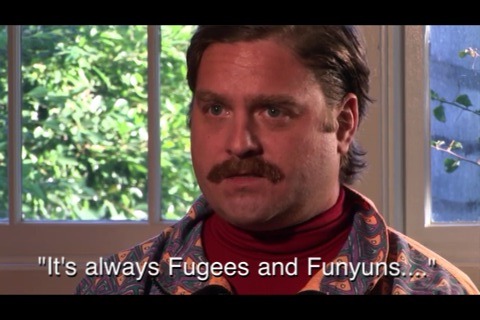
Zach Galifianakis Live @ the purple onion embodies everything I believe is funny, good performance  and good art. Comedy is universally considered one of the lowest forms of entertainment, but why? Because people like Ron White exist. Jokes that play on nothing and vulgarity are stand up comedy. From the first minute Zach Galifianakis steps on stage, minutes late because he didn't know when the show started, it is him against the audience. He isn't trying to humor them, but rather himself. His word play, self-righteousness, and nonconformity within the structure of a stand up routine, make a most entertaining performance  I was talking to a gurl who said after five minutes of it she turned it off because it was so hard to watch. I was shocked because I hadn't even noticed that his performance could make someone uncomfortable. It also might have been that every time I watch it, I've had my hands on my face crying with laughter. Galifianakis gives artfulness to comedy and can make any day for me a good one. Thank you my bearded friend, I'm sorry the hangover destroyed your life (which in fact is true, from the few interviews he had been forced to give).

XoXo
Matt


"If you love Barry Manilow, you're gonna love the Insane Clown Posse. Love them. They're exactly... well, they're not exactly alike, but they're a little bit alike." 

Thursday, October 11, 2012

CANDIDE, CRIME AND PUNISHMENT

The punishment never fits the crime. The umbrella like punishments we have established for dealing with the "criminal" have never done justice to the victim or the criminal (victim of the system). The overwhelming similarity  to me at least, between Candide and the modern world is that Candide is being punished by a world in which all he did was exist. He did not create or even choose to take part, but suddenly like birth, is placed with no training or prior knowledge to guide him. The world then takes advantage of him and begins to ravage and rip him apart piece by piece. Punishment for existing it seems, but it's the best of all possible worlds!
---I had been sitting in the greenery on Jackson and State when I was approached by a homeless woman who asked me "did I believe in god?" I said no, I wasn't opposed to god, but it didn't have much relevance in my life. Words frothed from her chapped gums as she screamed at me "Who do you think made all this!" "God has a plan for all of us, God is good, God is great, I would be nothing without god." How fucking depressing. She was indeed Candide. She knew no better than just to put faith in god. Her existence was far from good, she was missing all but seven teeth, but the world was good because she knew god was up there looking down. The indifference of the world was crushing her every second that she lived. The system created so that the majority could at least be fed and housed was up in a tower shooting down any potential she had. She was being punished by the world like Candide. Did she deserve this punishment, I don't think so. Who deserves to have all but seven of their teeth lost. Who deserves to wear a pink shirt so soiled by dried dirt and spit that you would mistake it for grey? Who deserves to have eyes the murky mix of yellow and red from their last drug intake. The world punishes, who? The unluckies, the Candides. Candide was kicked out of the castle, flung into the real world because he tried to kiss a girl. Put into the ocean without a lifeboat because he tried to live life, his crime doesn't fit the punishment, nor do most people's for that matter. It's the fact that life sucks and then you die, for those unlucky people who get the wrong end of the stick. The person who kisses the girl right as the king passes.

XoXo


Thursday, October 4, 2012

HowDoWeKnowWhatWeKnow?

Bertrand Russell described this as the problem in Philosophy.

Question:
Have you ever had a "Deep" coversation with someone//group of people where it ended in someone saying "everything is relative, this could all be a dream, nothing has to be real." Aside from that guy being a grade-A Ashhole, he's wrong. So if you were that guy, don't be, you were wrong, dead wrong sucka.

We know things relatively speaking, because of what Russell describes as Sense Data. I know that my desk will still be here after I open my eyes from the sensation it gave to skin, the smell it has, the color of it, the taste if I was so inclined to lick it. How can we deny our sense data? There is no probable reason to and so we must accept that what we sense is real. With that though, we must accept that when our senses are cut off (blinking) we cannot know what that the obeject which exists strictly by sense to still be in existance but we can assume. Knowledge then is a conglomoration of sense datas and assumed sense datas which are to be ascribed as "real". There for knowledge, relative to our own expirences, is a history of sense datas.

Well then what about things we are told? We didn't see, smell, touch, taste, hear the Civil War.

That is knowledge by discription. Knowledge by description comes from our understanding of the reality of objects which would have existed within the described. How do we know that the Civil  War happened? Well we know people are real, we know of the existance of clothing, fields, etc. Therefore we can assume it was real.

~Now to which parts of history are true or not is another quetion, the answer from which I can not steal from my dear Welsh friend Bertrand.

History is the acceptance of truths based on singular or multiple perspectives which detail an event unfolding a specific way. Therefore history will always be "true" and "mistold" at the same time. With the passing of time, ascriptions of previous and future events and their effects on to said historical event, and from which perspective the event was looked upon (each perspective including the previous criteria), how can we know anything definite about the past. So! If everything we know besides what we expierenced is history, we know very little for sure. All we can do is assume, and you know what that does. No wonder humans have described themselves as idiots.
Bertrand Russell

Also, The Problems of Philosophy is free on Amazon.com for Kindles. Gud Reed.

XoXo

Friday, September 28, 2012

Gadfly!

Salesman:
For those who haven't seen it. See it or take a college film class, you'll see it then.

Four Bible salesman. The open road.  Fall in love with these men. Fall out of love with the world. The American dream. The American Nightmare. How do you sell the Holy Book? These guys have been doing it for more than twenty years and they still don't know.
You'll find out how scary honesty is.

Salesman was a revolution; both in film and in my head. Salesman is cinema verite: literally, cinema-truth. It revolves around the idea that if you put a camera in front of a person eventually they will forget that it is there and return to acting like their original selves.
~~~~~~~~~~~~~~~~~~~~~~~~~~~~~~~~~~~~~~~~~~~~~~~~~~~~~~~~~~~~~~~~~~~~~~~
~~~~~This does beg the question if the people on Jersey Shore or Real Housewives of New Jersey actually act like ogres, since they do spend a majority of their waking lives in front of a camera.
probably not. no.
~~~~~~~~~~~~~~~~~~~~~~~~~~~~~~~~~~~~~~~~~~~~~~~~~~~~~~~~~~~~~~~~~~~~~~~
                               ~~~~~~~~~
I tried to contain the "New Jersey" as to not infect the rest of this post.
                               ~~~~~~~~~
Salesman is the perfect gadfly because it says so much without saying anything at all. While Micheal Moore's veins pop as his shrill nagging voice is slammed into that megaphone he carries everywhere, the Maysles sit quietly actually documenting. They pose questions by presenting the truth. Brilliant!
You can't shove an opinion at someone and expect anything but shut doors and closed minds. Documentaries don't document anymore, they tell, they shout, loading people with more facts to support their already bloated arguments. Do they change anyone? No of course not, everyone who went to see Moore's most recent garbage (french pronunciation for comic effect, always use french pronunciation when talking about film, the northward dwelling liberals love it.) already had an opinion before they even entered. The Maysles give you information and let you take what you want. So-crates asked the rich and powerful questions on those Greek stairs, some understood his message, most didn't. McCarthy stressed this; So-Crates never imposed his opinion on the people he questioned. The Maysles didn't either.

There had to be a couple people who left thinking.
 
Fact: Gil from the Simpsons is based on one of the characters in salesman.


Gil- "I need this sale, my wifes gonna leave me"
Car Salesman - "I'll take it from here Gil"
Gil picks up phone - "You should have seen me honey, I was so close to making a sale. Hey, who is that in the background? Awwww, is that Tom? I thought you were gonna leave him. No, no... dont put him on. Oh, hi Tom!"

XoXo


The Unexamined Life Is Not Worth Living?

The unexamined life is the life that is lead by most people, examination only leads to problems doesn't it. We question we get crucified, put to death, excommunicated from our church, our family, our friends. Are most people even capable of asking questions that invoke any thought? If the majority examined their life would they even find anything or would blank spaces frustrate them as they circled around questions they cannot possibly find the center of. The answer lies in the fact that we have denoted a profession to people who examine life; the philosopher. They are able to question and we are able to become enlightened through them. We (the majority) don't have the will power, brians, or enthusiasm for asking questions that will never be answered. Does this we mean we shouldn't expose ourselves to the unknown? Of course not, while it seems to me that it is a waste on a person who will never want to examine their existance, we should try to bring enlightenment and conciousness to everybody, give em' a nibble and see if the fish pulls. If so reel em' in. If not let them keep swimming. To often there is a misunderstanding between examination and imposisiton. Being forced down and choked as you shove your beliefs down my throat, which while might sound a bit harsh, is what people tend to do when discussing ideas. I think this stems from lack of confidence in their own beliefs. People become more adamant as they are less sure. Back to the examined life. Yes it's good. It's not for everybody, actually for few people. If you don't get it, you don't need it and shouldn't feel bad. If you are be as loud as you can about it. Read Man and Superman, at least until you fall head over heals for the rouge attitude and confidence of Jack TannerJust don't choke people, it's hard to know where the line between discussion and choking is.

XoXo

Thursday, September 6, 2012

Eulogy:

The lifeless Lithuanian corpse before us is a young man by the name of Matthew Balzekas. He was confused by "it all". He died a teenager and that is what teenagers feel; anxiety.
Did he accomplish anything of significance? He was an eagle scout. That means something to some people, people he liked, working class people.
Did he accomplish anything? He had a band and made films. Were they of any value? No, but they showed signs. If only he didn't die so young, maybe he would have figured it out. Maybe if he didn't wallow away his time, knowing better but still watching television on his laptop and listening to music because the "other" was a couple footsteps away. Long footsteps that is, to a destination where he would only judge himself to harshly to garner any momentum.
Maybe if his family wasn't middle class american, born and bred.
Maybe if the blanket that shielded his whole life was lifted or burned in some sort of cataclysmic action his way of thinking would be more concrete.
Matthew lies here at six foot three and 180 pounds.
Matthew was fed three meals a day and given money to buy snacks if he wanted. His mother didn't keep track of money, she didn't need to, she had too much. The excesses of the sufficient had given him a reckless confidence to say anything he wanted to, without much thinking. He did have regret, probably the average amount for a white male. But who knows, no one really talks to each other.
He wanted to be part of people's lives. Faces that he had no more than names for confronted him in the hallway and gave way to feelings of loneliness. His friends were never good enough, searching for something more was something he liked to do. A higher goal? Perhaps. Maybe he strived for something beyond the high school rigmarole. If that was the case and it wasn't a defeating self martyrdom (one which after editing predominates this eulogy) good for him. His friend which he liked to call by his first name, but which we can not include in here so we will supplement it with the letter of which his first name started with, A, was a good man, a good young man that is. He liked A, he just wished that A liked rock music. Trivial in the light of both of their deaths. A and Matthew died on the same day, eulogies to be submitted on the same day, a Friday.
Matt would be glad he died on a Thursday night, one appreciated by all because of the heat that preceded it. Matt liked Thrusdays, they had the routine of a weekday with the feeling of anticipation for the weekend. There was peace and sereneness that sat upon a Thursday.
Matthew could have written more. He could have written a lot more. He wouldn't because he knew that sometimes there's beauty in leaving things unexplained. He liked life enough. It's sad that he died, that all american son of a bitch.